Lesley-Anne got back her year-end exam results last week and overall, we're pretty pleased with it. Except for Higher Chinese where she scored a B4, she received an A grade for everything else. As we all know, it's not always the case that hard work will translate into good results but this time, it really paid off for her and we're very grateful for it.
The subject we were most pleasantly surprised by though, was maths. As I'd previously blogged, Lesley-Anne had been struggling with maths this year, earning herself a C5 in E Maths and a dubious F9 in A Maths in her mid-year exams. We got her a math tutor and even though we expected to see improvement, we weren't predicting any miracles.
The results turned out to be pretty drastic. For the CA2, barely 3 months after tuition commenced, Lesley-Anne's A Maths grade jumped from F9 to C5. For this end of year exam, she scored an A1 for E Maths and an A2 for A Maths, just one mark shy of an A1.
To tell you the truth, I'm pretty torn by this turn of events. On one hand, of course I'm delighted by the results. On the other hand, I'm actually feeling a little perturbed. Why? Because the results show that contrary to what her F9 grade indicated, Lesley-Anne has the capacity to learn maths. Just not from her school teacher.
This bugs me. In my opinion, a student should be able to learn at least the rudiments of any given subject from school with the prerequisite hard work, unless he really has zero aptitude for it. I've never been a big proponent of tuition unless the child truly needs help. However, from this experience, I found that in just 6 months, a once-a-week, two-hour tuition session made all the difference. I can only conclude that it's not the amount of effort or the hours spent learning maths, it's the teaching method.
I'm pretty sure that Lesley-Anne would not have gotten these results if she had continued to try and learn maths purely from school. For some reason, she can't understand the way her teacher explains concepts and maths remedial didn't help since he would repeat the topics in the same way. Maybe he thought that her poor results were because she wasn't working hard enough or wasn't paying attention.
I totally get that it's more difficult to teach a classroom of kids than tutor
one student but Lesley-Anne was not even remotely passing A Maths, which
tells me she hadn't even grasped the basic concepts.
If it's true that our children sometimes don't do well in school because they can't understand the teachers, then this is troubling. How can our education system wean kids off tuition if it is more effective than school? What about kids who can't afford tuition? There is also the question of how many kids think they are stupid or do not have the aptitude to grasp a subject when maybe it's just the way it is taught that's not effective.
These are difficult issues that have always been a challenge - finding good teachers, equipping them with the right tools, making sure they have enough time and resources to do their job well, etc. Nevertheless, they need to be addressed if MOE wants to convince parents that "every school is a good school".
For now, I'll just have to be resigned to the fact Lesley-Anne's maths education is not from school but an external source. It's not ideal but at least it's effective.
Monday, October 29, 2012

Monday, October 22, 2012
Basic grammar rules
Throughout primary school, Andre had trouble with grammar rules regarding singular/plural and past/present. He could never seem to remember when to use what and often relied on what he felt "sounded right" (which of course, was frequently wrong!)
For some reason, even though we're an English-speaking family, he could never quite get a handle on grammar. A teacher friend of mine suggested that I compile a list of rules for Andre. I attempted it and found that it helped tremendously. Somehow by organising the rules for him in a structured format, they didn't seem so arbitrary to him and became much easier to remember. The list also acts as a convenient reference list.
So for parents out there with kids like Andre, I thought I'd share my list. Do note this is not exhaustive but it covers most of the major ones.
Grammar Rules
1. Is it singular or plural?
(Look at the front noun). Is it past or present?
a. The butcher sells meat at the
market everyday.
b. John cleaned his shoes
yesterday.
2. These are all singular:
a. None of the girls is coming.
b. Each of the boys has a pen.
c. Everyone is coming to the party.
d. Every artist loves to paint.
e. Anybody is allowed to participate.
f. Somebody is
coming.
g. Something is missing.
h. Neither of the girls likes to travel
i. Either one
of them is coming.
j. Uncountable
nouns: Water leaks from
the pipe.
3. These are all plural:
a. All the boys have pencils.
b. Both of them love ice cream.
c. The pen and book belong
to Ali.
d. A few marbles were rolling on the floor.
e. Many people visit the zoo.
f.
Most
children dislike vegetables.
4. Singular or plural – for these, look
at the front:
a. John as well as the girls loves to go to the
beach.
b. The girls except Mary like to eat
fried chicken.
c. All the trees but the one with fruit are to
be chopped down.
d. Susan, together with her friends, is playing
at the playground.
e. These books, with the magazine, belong
to Jasmine.
f. The carpet,
like the curtains, brightens up the room.
g. Collective nouns: A group of
boys is coming this way.
5. Singular or plural – for these, look
at the back:
a. Either the eraser or the pencils
are missing.
b. Neither the bags nor the box is
heavy.
Monday, October 15, 2012
Burn, baby, burn
This is PSLE marking week and I'm praying that the markers will be able to make sense of Andre's scripts.
Preparing Andre for composition was especially nerve-wrecking. Despite my pleas, he has a tendency to write grandiose plots featuring himself as the hero. When I told him it wasn't realistic to write about how he jumped on and single-handedly subdued a burglar, he asked earnestly, "Can I say that I tripped him up and he turned a 360 degree somersault?"
Please, God, let the marker of his PSLE composition have a sense of humour. And preferably a few young sons.
What I'm very grateful for is that PSLE preparation has not affected Andre's self-esteem. When he is unable to make sense of a question, he's likely to conclude that there's something wrong with the question, not his intellect. For instance, there was a science question which asked, "what could be a reason why the graph shows no difference in the level of carbon dioxide even when the number of plants increased?" He answered, "the graph is wrong."
Lesley-Anne is also undergoing her end of year exams but I haven't been stressing out over it as I can trust her to do her own revisions. Like I always say, God is fair. When you have a kid who's relatively low maintenance, you can be sure to have another that will require double the effort.
Last week, we got down to clearing the p6 textbooks and PSLE assessment books. Andre declared rather savagely, "BURN THEM!" Isn't it sad that the PSLE is such an unsavoury experience that most kids want to eliminate every sign of it when they're done? After the English paper, Andre told me, "it's raining sheep and goats!" When I looked at him puzzled, he explained, "English exam over. I've thrown all the English out of my head."
Being environmentally conscious, we didn't burn the books. We sorted the books into two piles - textbooks and uncompleted assessment books to be given away, all others to be dumped in the recycling bin.
 This is just a fraction of the school exam papers Andre has plowed through. So much paper! I really believe if the PSLE is scrapped, we can save an entire rainforest.
 I also find it hilarious that Lesley-Anne was the one helping to sort the books while the owner of the books (and the resident bum) took a nap.
 We ended up with four humungous bags of books to be reused. I feel sorry for the recipients already.

Preparing Andre for composition was especially nerve-wrecking. Despite my pleas, he has a tendency to write grandiose plots featuring himself as the hero. When I told him it wasn't realistic to write about how he jumped on and single-handedly subdued a burglar, he asked earnestly, "Can I say that I tripped him up and he turned a 360 degree somersault?"
Please, God, let the marker of his PSLE composition have a sense of humour. And preferably a few young sons.
What I'm very grateful for is that PSLE preparation has not affected Andre's self-esteem. When he is unable to make sense of a question, he's likely to conclude that there's something wrong with the question, not his intellect. For instance, there was a science question which asked, "what could be a reason why the graph shows no difference in the level of carbon dioxide even when the number of plants increased?" He answered, "the graph is wrong."
Lesley-Anne is also undergoing her end of year exams but I haven't been stressing out over it as I can trust her to do her own revisions. Like I always say, God is fair. When you have a kid who's relatively low maintenance, you can be sure to have another that will require double the effort.
Last week, we got down to clearing the p6 textbooks and PSLE assessment books. Andre declared rather savagely, "BURN THEM!" Isn't it sad that the PSLE is such an unsavoury experience that most kids want to eliminate every sign of it when they're done? After the English paper, Andre told me, "it's raining sheep and goats!" When I looked at him puzzled, he explained, "English exam over. I've thrown all the English out of my head."
Being environmentally conscious, we didn't burn the books. We sorted the books into two piles - textbooks and uncompleted assessment books to be given away, all others to be dumped in the recycling bin.


Monday, October 8, 2012
Post-PSLE euphoria and a double celebration
The last PSLE paper for Andre was science on Tuesday and the best way I can describe how Andre felt was when Frodo had finally thrown the ring into the Fire of Mount Doom and declared, "It is done!"
It is done indeed. As for me, I had visions of George Michael belting out "Freedom!" in my head.
As it so happens, Tuesday was also Andre's birthday so it was perfect timing for a double celebration. Lesley-Anne was off from school as it was an elearning day for her, so we brought the whole family to Hard Rock Cafe for Andre's birthday lunch.
Hard Rock Cafe is a perennial favourite for us and their weekday set lunch really can't be beat in terms of value and taste. For $15 nett, you get a soup or salad, an entree, a dessert and free-flow iced lemon tea.
 Andre chose the ribs for the entree - sizeable portion.


When we got home, he opened his presents and you could just see the unbridled joy bubbling over. Clearly, it's not really about the gifts, it's about having overcome a major ordeal.

This was Andre before the PSLE - doom and gloom.

And this is Andre after.


He's now vehemently opposed to any activity that requires "thinking", as he calls it. So for the past week, he has been binging on a diet of computers games, tv and aimless lounging. I suspect he will OD on sloth pretty soon and I should put a stop to it before his brain cells atrophy from disuse but for now, I'm letting him be. He has worked hard and he deserves his chillaxin' time.
Many birthday blessing to you, my sweet char siew pau ♥ ♥ ♥
It is done indeed. As for me, I had visions of George Michael belting out "Freedom!" in my head.
As it so happens, Tuesday was also Andre's birthday so it was perfect timing for a double celebration. Lesley-Anne was off from school as it was an elearning day for her, so we brought the whole family to Hard Rock Cafe for Andre's birthday lunch.
Hard Rock Cafe is a perennial favourite for us and their weekday set lunch really can't be beat in terms of value and taste. For $15 nett, you get a soup or salad, an entree, a dessert and free-flow iced lemon tea.


The dessert was the signature Hard Rock brownie with ice cream. Words cannot describe how much we ♥ the Hard Rock brownie.

When we told the staff that it was Andre's birthday, in line with Hard Rock tradition, they sang him the birthday song, presented him with a complimentary sundae and even gave us a Polaroid of him to mark the occasion. Awesome!

When we got home, he opened his presents and you could just see the unbridled joy bubbling over. Clearly, it's not really about the gifts, it's about having overcome a major ordeal.

This was Andre before the PSLE - doom and gloom.

And this is Andre after.


He's now vehemently opposed to any activity that requires "thinking", as he calls it. So for the past week, he has been binging on a diet of computers games, tv and aimless lounging. I suspect he will OD on sloth pretty soon and I should put a stop to it before his brain cells atrophy from disuse but for now, I'm letting him be. He has worked hard and he deserves his chillaxin' time.
Many birthday blessing to you, my sweet char siew pau ♥ ♥ ♥
Monday, October 1, 2012
Piecing together the PSLE puzzle
There has been a lot of debate over the PSLE lately and people were wondering if this sacred cow would finally be slaughtered, until PM came out and put an end to that speculation. He said that instead, MOE will look at ways to reduce the pressure on this one single exam.
I've long been meaning to write a piece on the PSLE and this is as good a time as any.
The dastardly bell curve
To me, the main reason why PSLE is so stressful is the bell curve. There's a lot of misconception and confusion as to how the PSLE t-score is calculated so I'll try to simplify it here.
Each subject - English, Chinese, Maths and Science - is weighted equally at 100. Your t-score, however, is calculated on a bell curve. What this means is that your t-score for each subject is based on your relative score to the cohort and if you are right smack in the middle (exactly average), you will get a t-score of 50 points for that subject.
For example, if for that year's Science paper, the cohort's average was 75/100 and you score exactly 75/100, you will earn 50 points. If you perform better than or worse than 75/100, you will score more than or less than 50 points respectively. How much more or less depends on the standard deviation which reflects the spread of marks across the cohort.
If you want a more detailed explanation on how t-score is calculated, here's quite a good one.
What this means is that if your child is Joe Average and he scores 50 points for every subject, he will get a total t-score of 200. Which doesn't sound like much to most parents, I know. They don't realise that by scoring more than 200, their child is already above average. That's why I feel that PSLE is harder than many parents think. We hear of the 260 scorers so often that we don't realise these are by far a small minority and we start imposing unrealistic expectations on our own kids.
Using t-score is a fairer form of assessment than using raw scores because it takes into account variables like difficulty of the papers. However, adopting the bell curve gives rise to very undesirable traits. It's as ruthless as Jack Welch's business approach to GE - rank every employee and every year, get rid of the ones at the bottom. It's based on the principle that in any sample population, there will always be someone under performing.
I disagree with it in the business context and I find it detrimental in the school context. Ranking fosters competition and discourages collaboration because it becomes a race where it's about outrunning your rivals rather than performing to the best of your ability. I'd rather score an A and have my schoolmates score Bs than score an A* along with everyone else. This is what we want to teach 12-year-olds? That I'm a champ if I pass and my neighbour fails? Talk about screwing teamwork and cameraderie.
We are encouraging kiasuism by creating scarcity, explained very well here by an economist blogger.
Even putting aside the ugly competitiveness, the bell curve has severe limitations. Anecdotally, we know that kids are getting "smarter" in the sense that parents are getting more involved and investing more resources into their kids' education. Kids are studying harder, always looking to beat the exam system. By this logic, as a general population, our kids should actually be learning more in this generation than the last. I'm pretty confident the average student today will outperform the average student 20 years ago.
The bell curve does not reflect this as it merely imposes the same distribution on every population. In other words, I suspect that cohorts have been improving as a whole over time but we will never know for sure as the bell curve cannot measure between cohorts.
Why is this important? Simply because the PSLE t-score then is NOT indicative of real ability, only relative ability. Yet the cut-off point for the Express Stream, has remained at 188 for a long time now (I don't have the information for when this score was introduced). This is an arbitrary figure at best - a child who scores below 188 today may be more suited for the Express Stream than one who scored below 188 ten years ago. If our education system is as effective as we like to claim, should we not make room for the possibility that more kids are learning at an acceptable level?
In an environment where kids tend to internalise the t-score as a measure of his or her ability, the bell curve generates a lot of anxiety and can fuel low self-esteem. All this from a mechanism which, when you break it down, exists primarily to issue you with a queue number to choose your secondary school.
Call for more transparency
The PSLE maths papers were on Friday and Andre came home looking a little deflated, saying the Paper 2 was quite tough. When I say a paper is tough, I mean it is of a similar level of difficulty to those of certain branded schools known for their difficult papers. I want to qualify this because I personally get miffed when I hear that some kids come out of a challenging exam declaring that it was "so easy". It demoralises other kids who may have struggled (or maybe that's their intent) and increases the anxiety of parents. Defining something as hard or easy based on whether you personally can do it is extremely narcissistic. Somebody should tell these folks that standards do not begin and end with them.
This brings me to my other point that if MOE wants to make the PSLE less stressful, they should start making it more transparent. I find that much of the PSLE is shrouded in mystery, like it's some major national secret. The uncertainty contributes exponentially to the stress because parents don't know what to expect.
Maths has always been one of those subjects where parents fear a suddenly difficult paper. I believe this is the reason why the maths standards have accelerated so much over the years. In an effort to beat the PSLE, schools have been introducing more and more non-standard questions, some of which are simply beyond the conceptual level of many 12-year-olds.
The acceleration is not without cause. In 2009 (Lesley-Anne's PSLE year), the maths paper was unexpectedly difficult, leading to much hue and cry. I suspect it's because 2009 was the first year of the new maths exam format - 2 papers and calculators allowed for Paper 2 and MOE didn't calibrate the difficulty appropriately.
If MOE had admitted this, I would have accepted it as teething problems. Instead, MOE chose to dish out the standard response to protesting parents, along the lines of "the standard of the paper was equivalent to that of other years'. Parents are just being kancheong because they don't see the whole picture." (Paraphrasing, of course). In other words, we're myopic. And over-reacting.
Usually following such complaints, when the results are released, mainstream media would inevitably report that the complaining parent's kid got A* in maths afterall, making the parent look foolish. I used to think the same way - wah so kiasu. Still A* what, why so kancheong.
It was only after Lesley-Anne's PSLE that it dawned on me what a sham it was. Here's why: in all the practice papers that Lesley-Anne did for maths that year, she NEVER scored more than 90 (which is the stated absolute mark for an A*). In fact, for some of the top school papers, she scored in the range of 70s.
She came home from the PSLE maths exam crying because she said it was MORE difficult than the top school papers. In fact, she left three 4-mark questions blank. You do the math. Even discounting the other mistakes she would most certainly have made, there was no way she could have scored more than 90. Yet, here's the bombshell - she scored an A*.
Impossible? Hers was not the only case. I know many of her schoolmates experienced the same situation. I think when faced with this, parents are so delighted by the A* they prefer not to question the inconsistency.
There's only one probable explanation for this - that besides moderating the t-score, MOE also moderates the grades. It was like a light bulb went off in my head and set my thinking on a whole new trajectory. In other words, the cut off score for an A* can vary each year, depending on how well the cohort performs. It's just a matter of deciding what percentage of kids get an A*.
By moderating grades, MOE is effectively hiding your true score and covering their bases. They have always claimed that papers are of an equal standard each year by saying that the number of A/A* achieved remains constant. But if you control the number of A/A* to begin with, well, then the argument is circular and invalid.
There is no way of proving that I'm right and as far as I'm aware, MOE's official statement is that an A* is 91 and above. But I know that as a whole, parents are not dumb. If many kids across the island reportedly come out of an exam crying, saying an exam was difficult, it is unlikely to be a coincidence and shouldn't be dismissed so patronisingly. If MOE wants to insist that they are right, then I say, prove it by releasing the raw scores for the 2008, 2009 and 2010 maths papers. I would love to know what percentage of kids actually scored less than 50/100 and more than 90/100 as well as the cohort average for the maths exam in 2009. Versus 2008 and 2010.
Do you know that you cannot find a complete PSLE paper anywhere? When you buy the book of past PSLE papers, the questions are strangely broken up by topics, not by year. In fact when you do the questions, you don't know what year each question was from. Again, what's the big secret? What's the harm in letting kids practise the full papers by year? The only reason I can think of is so that people can't gauge and dispute the difficulty of each year's paper.
The uncertainty means there's confusion all around. After the 2009 PSLE maths fiasco, parents went into panic mode. Then the 2010 and 2011 math papers were supposedly easy. Parents and teachers didn't know what to expect. Do you just learn what you need to? Or prepare for a really tough paper? As it turns out, this year's was more difficult. I don't think it's anything like 2009's but still, the inconsistency is unsettling.
Educate with continuity in mind
The PSLE is supposed to be a gauge of standards, to prepare you for secondary school. However, I find a huge disconnect between what is taught in primary and secondary school. For example, in maths, primary school stresses the model method and systematically dissuades the use of algebra. The day you leave primary school, you don't touch models. Ever. Instead, secondary school maths uses, guess what? Algebra.
In primary school composition, you write boring, mundane stories, mostly about accidents, while peppered with lots of fancy, multi-syllabic words. In secondary school, accidents magically become non-existent and you suddenly have to write about things like the ills of computer games.
Many kids who are weak in English and had their t-scores pulled up primarily because of good marks in Chinese, find themselves lost in secondary school because Chinese is only one subject, whereas you need a strong grasp of English to do well in many subjects, especially the humanities. But of course we all know what happened when MOE tried to reduce the weightage for Chinese at PSLE a couple of years ago.
It's no wonder that many kids who score well for PSLE end up struggling in secondary school. I find it frustrating that we spend so much time preparing our kids for the PSLE which is in essence, merely a placement test. And as it turns out, it's not even a very good placement test.
Now that the authorities have said PSLE is here to stay, I think MOE needs to take a long, hard look at correcting its flaws. By tomorrow, my kids would be done with this trial (hooray!) but for the sake of other kids who have yet to face this challenge, I sincerely hope there is change for the better.
Monday, September 24, 2012
Timeless - an evening of dance
During the June holidays, the dance studio where Lesley-Anne learns ballet put on a concert. This event is organised once every three years and is a great platform for the students to showcase their talents.
At the last concert in 2009, Lesley-Anne was only in Grade 4 so her dance was a lot simpler. (She looked so cutesy then! Sigh...) Now at Grade 6 going on Grade 7, the choreography for her class incorporates much more sophisticated dance moves.
 Have you ever seen black ballet shoes? They're utterly cool.
 She participated in two dances in the Timeless concert. The first was a combined jazz number with the Grade 7s and I loved it. Svelte black tights and top hats to Michael Buble's Fever.

 Here's a video of that number. Lesley-Anne is the second to enter from the left after the opening chair sequence.


There's just something so aesthetically melodious about dance, and letting Lesley-Anne learn ballet was one of the most satisfying decisions we've ever made. Dance provides her with an outlet for her latent physical expression needs and is the perfect foil to her otherwise lun-zhun nature (unfortunate genetic inheritance from moi).
She loves ballet so much so she's going to continue till she finishes her Grade 8 exam. In fact, she's considering taking up dance as a CCA in JC. More opportunities for performance? That would be awesome.
At the last concert in 2009, Lesley-Anne was only in Grade 4 so her dance was a lot simpler. (She looked so cutesy then! Sigh...) Now at Grade 6 going on Grade 7, the choreography for her class incorporates much more sophisticated dance moves.
 Have you ever seen black ballet shoes? They're utterly cool.
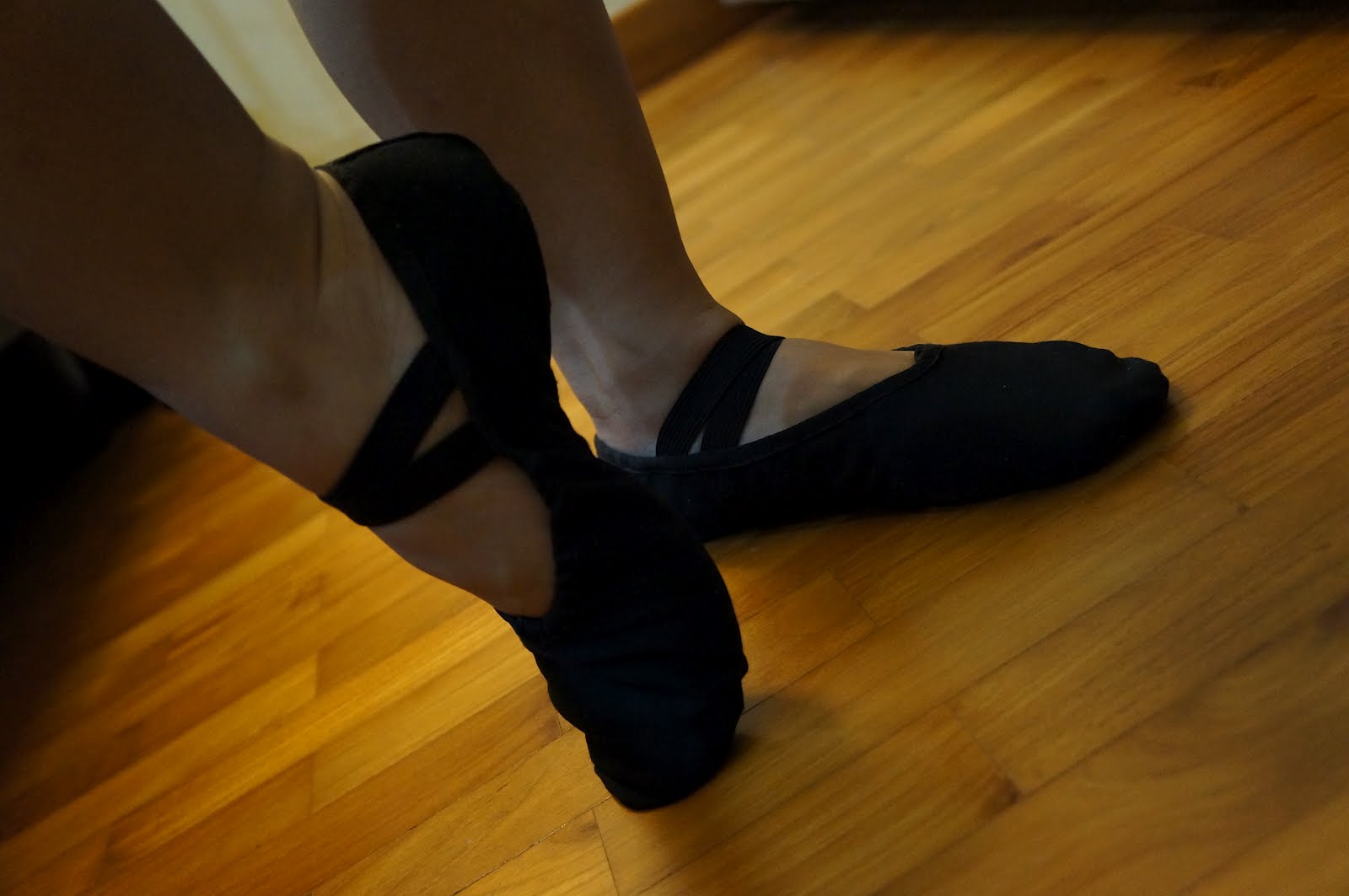 She participated in two dances in the Timeless concert. The first was a combined jazz number with the Grade 7s and I loved it. Svelte black tights and top hats to Michael Buble's Fever.


Lesley-Anne's Grade 6 class also performed another dance, a Chinese one. I didn't like this one as much but I guess it was to showcase the diversity of dances.


There's just something so aesthetically melodious about dance, and letting Lesley-Anne learn ballet was one of the most satisfying decisions we've ever made. Dance provides her with an outlet for her latent physical expression needs and is the perfect foil to her otherwise lun-zhun nature (unfortunate genetic inheritance from moi).
She loves ballet so much so she's going to continue till she finishes her Grade 8 exam. In fact, she's considering taking up dance as a CCA in JC. More opportunities for performance? That would be awesome.
Monday, September 17, 2012
Steering the education mothership
Education Minister Heng Swee Keat made a speech on the upcoming changes to the education system last week and there were many things in it that made me go "YES!" You can read the full speech here, it's much more comprehensive than in the media reports.
He touched on many points but here are a few that particularly resonated with me:
1) School banding will be abolished with immediate effect (paras 55-56) - YES
For those who don't know, secondary schools used to be banded from 1 to 9 based on their O level results and these figures are published. Although banding was purely by academic results, it gave the impression to parents that the higher the band, the better the school. Following that logic, band 9 schools then must be really terrible, which isn't a fair assessment. By scrapping school banding, MOE is signalling that schools should not be assessed narrowly by academic grades.
Some people people are saying that MOE should then scrap the Cut-Off Point (COP) for each secondary school as well, if we want to eliminate this academic ranking of schools. I don't see how this is possible. P6 students need to see what see what schools they are eligible for based on their PSLE results, so the indicative COP of each school still serves a purpose.
2) School Excellence Award and other similar awards will be scrapped (paras 57-64) - YES
I think the biggest damage to the school system was done when some HR or management idiots decided that it would be a good idea to turn schools into mini factories, by implementing all sorts of accreditation schemes and their accompanying KPIs. Whoever thought you could measure how good a school was with a checklist of ticks and a best practices award should be slapped silly and made to stand in the corner.
Say it with me: education is NOT a business. We saw the effects - teachers had their focus shifted from teaching to administration, principals from running the school to chasing awards. By all means, encourage best practices. But ditch those darn awards.
3) Schools and exams should not be run based on the assumption that students have external tuition (paras 119-123) - YES YES YES
I am so tired of my kids coming home with questions on their exam papers that they haven't been taught how to do. This just creates so much anxiety among parents and exacerbates the tuition culture. Incidentally, briefly running through a method once or twice does NOT constitute teaching. Teaching means going through something extensively enough until most of the students in the class can understand and apply it.
I was so excited to read this para that I had to highlight it:
For too long, MOE has remained silent on the issue of tuition, so going for indiscriminate tuition, whether there is an actual need or not, has become de rigueur, even a badge of honour (especially going to high end tuition centres). By publicly denouncing such practices, they are reducing the positive attachments, hopefully causing parents to give pause before embarking on such a practice. Tuition centres will also think twice before taking out full page advertisements trumpeting the names of their top students.
Of course there will always be kiasu parents who will not change their ways, come hell or high water. But we have to stop rewarding their behaviour and it's about time we held up the non-kiasu parents as the ones to emulate and support.
I don't know about you but I was very heartened by this speech. Minister Heng seems to understand the depth of the challenges involved and addressed issues that would block the path on which he's trying to steer this mammoth education mothership. I like that he didn't just glibly promise changes to score brownie points with parents. In fact, he didn't mince words when asserting the rights of teachers over unreasonable parents. I'm so over politicians trying to be politically correct - let's just say it as it is.
Some issues are impossible to solve overnight and declaring instant measures would simply be irresponsible. For example, I know many people are calling for the PSLE to be abolished. I, for one, agree there's no need to subject 12-year-olds to this stressful and largely meaningless exam.
However, it's easier said than done. Suka suka abolish one meh? Off the top of my head, I can instantly think of several repercussions this might cause. What if you abolish PSLE and suddenly, 70% of the p6 kids decide they want to study at schools like RGS and RI (because they don't believe the MOE slogan "Every School a Good School")? So who gets in? Ballot ah? Unfair (not to mention chaotic). Proximity to school? Wah, watch property prices in Bukit Timah and Bishan skyrocket. What's likely to happen is popular schools will hold their own entrance exams. Tuition centres will offer prep courses. Enterprising individuals will hawk top school entrance exam papers. Cramming. Tuition. Sounds familiar? It's PSLE 2.0.
Some people say get rid of the PSLE and revert to a 10-year through train education from p1. In principle, I agree with this but this is feasible only if you're designing an education system from scratch. With current schools in place, how to execute? How do we decide which primary school should be linked to which secondary school? For example, if MOE decides that Tanjong Katong Primary School students will now move directly to Dunman High and there's a mad surge in admissions to the former, then how? The bottleneck will be shifted downwards from sec 1 to p1. As if there isn't already enough stress over p1 registration.
In short, there are no simple solutions and anyone who suggests otherwise is being naive. I'm glad MOE is taking it step by step rather than announcing big, grand schemes that have not been properly thought through. One of my biggest bugbears of gahmen policies is that they are sometimes implemented as if they exist in isolation. More often than not, one gahmen policy will impact on something else, sometimes an area not under the purview of the same Ministry *cough immigrationandhousing*.
My gut feel is that MOE is considering eliminating PSLE but they're looking at the issue from all angles to see if there is a painless way of killing this sacred cow (insert all the Mr Brown sacred cow jokes).
Disclaimer: I don't have connections with any MOE officials or hear anything from the grapevine, so don't bet on it! This is pure guesswork on my part.
At the end of the day, execution is key. What I found encouraging about the speech was the direction MOE seems to be taking, towards a more holistic, less competitive and academic-focused type of education. Some people remain critical but I don't see how constantly pouring cold water on efforts or declaring "you just watch, nothing will happen!" is helpful. Even if you're right, how is that constructive? There's a world of difference between being smart and being a smart-ass.
I know these are just baby steps but instead of saving my happiness for the improbable time when the glass is totally full, I prefer to be thankful for small victories.
We're not there yet, that much is for sure. But at least we're that bit closer.
He touched on many points but here are a few that particularly resonated with me:
1) School banding will be abolished with immediate effect (paras 55-56) - YES
For those who don't know, secondary schools used to be banded from 1 to 9 based on their O level results and these figures are published. Although banding was purely by academic results, it gave the impression to parents that the higher the band, the better the school. Following that logic, band 9 schools then must be really terrible, which isn't a fair assessment. By scrapping school banding, MOE is signalling that schools should not be assessed narrowly by academic grades.
Some people people are saying that MOE should then scrap the Cut-Off Point (COP) for each secondary school as well, if we want to eliminate this academic ranking of schools. I don't see how this is possible. P6 students need to see what see what schools they are eligible for based on their PSLE results, so the indicative COP of each school still serves a purpose.
2) School Excellence Award and other similar awards will be scrapped (paras 57-64) - YES
I think the biggest damage to the school system was done when some HR or management idiots decided that it would be a good idea to turn schools into mini factories, by implementing all sorts of accreditation schemes and their accompanying KPIs. Whoever thought you could measure how good a school was with a checklist of ticks and a best practices award should be slapped silly and made to stand in the corner.
Say it with me: education is NOT a business. We saw the effects - teachers had their focus shifted from teaching to administration, principals from running the school to chasing awards. By all means, encourage best practices. But ditch those darn awards.
3) Schools and exams should not be run based on the assumption that students have external tuition (paras 119-123) - YES YES YES
I am so tired of my kids coming home with questions on their exam papers that they haven't been taught how to do. This just creates so much anxiety among parents and exacerbates the tuition culture. Incidentally, briefly running through a method once or twice does NOT constitute teaching. Teaching means going through something extensively enough until most of the students in the class can understand and apply it.
I was so excited to read this para that I had to highlight it:
"MOE can do our part not to contribute to the need for tuition. Our schools and our examinations must not be run on the basis that students will have tuition. Some parents complain that our teachers tell the students to seek answers from their tuition teachers. If this is true, we must put a stop to it."Why was I so thrilled? Because this is the very first time I've heard MOE acknowledge that they have a part to play in curbing the tuition culture. May not seem like much to some but for me, it's a big step forward. As I've written previously, I've always felt that when the national body for education does not speak out against certain unhealthy practices occurring in the tuition industry, this indirectly encourages the practice to flourish. It's not about legislation or regulation. It's about influencing public mindset through endorsement or rejection.
For too long, MOE has remained silent on the issue of tuition, so going for indiscriminate tuition, whether there is an actual need or not, has become de rigueur, even a badge of honour (especially going to high end tuition centres). By publicly denouncing such practices, they are reducing the positive attachments, hopefully causing parents to give pause before embarking on such a practice. Tuition centres will also think twice before taking out full page advertisements trumpeting the names of their top students.
Of course there will always be kiasu parents who will not change their ways, come hell or high water. But we have to stop rewarding their behaviour and it's about time we held up the non-kiasu parents as the ones to emulate and support.
I don't know about you but I was very heartened by this speech. Minister Heng seems to understand the depth of the challenges involved and addressed issues that would block the path on which he's trying to steer this mammoth education mothership. I like that he didn't just glibly promise changes to score brownie points with parents. In fact, he didn't mince words when asserting the rights of teachers over unreasonable parents. I'm so over politicians trying to be politically correct - let's just say it as it is.
Some issues are impossible to solve overnight and declaring instant measures would simply be irresponsible. For example, I know many people are calling for the PSLE to be abolished. I, for one, agree there's no need to subject 12-year-olds to this stressful and largely meaningless exam.
However, it's easier said than done. Suka suka abolish one meh? Off the top of my head, I can instantly think of several repercussions this might cause. What if you abolish PSLE and suddenly, 70% of the p6 kids decide they want to study at schools like RGS and RI (because they don't believe the MOE slogan "Every School a Good School")? So who gets in? Ballot ah? Unfair (not to mention chaotic). Proximity to school? Wah, watch property prices in Bukit Timah and Bishan skyrocket. What's likely to happen is popular schools will hold their own entrance exams. Tuition centres will offer prep courses. Enterprising individuals will hawk top school entrance exam papers. Cramming. Tuition. Sounds familiar? It's PSLE 2.0.
Some people say get rid of the PSLE and revert to a 10-year through train education from p1. In principle, I agree with this but this is feasible only if you're designing an education system from scratch. With current schools in place, how to execute? How do we decide which primary school should be linked to which secondary school? For example, if MOE decides that Tanjong Katong Primary School students will now move directly to Dunman High and there's a mad surge in admissions to the former, then how? The bottleneck will be shifted downwards from sec 1 to p1. As if there isn't already enough stress over p1 registration.
In short, there are no simple solutions and anyone who suggests otherwise is being naive. I'm glad MOE is taking it step by step rather than announcing big, grand schemes that have not been properly thought through. One of my biggest bugbears of gahmen policies is that they are sometimes implemented as if they exist in isolation. More often than not, one gahmen policy will impact on something else, sometimes an area not under the purview of the same Ministry *cough immigrationandhousing*.
My gut feel is that MOE is considering eliminating PSLE but they're looking at the issue from all angles to see if there is a painless way of killing this sacred cow (insert all the Mr Brown sacred cow jokes).
Disclaimer: I don't have connections with any MOE officials or hear anything from the grapevine, so don't bet on it! This is pure guesswork on my part.
At the end of the day, execution is key. What I found encouraging about the speech was the direction MOE seems to be taking, towards a more holistic, less competitive and academic-focused type of education. Some people remain critical but I don't see how constantly pouring cold water on efforts or declaring "you just watch, nothing will happen!" is helpful. Even if you're right, how is that constructive? There's a world of difference between being smart and being a smart-ass.
I know these are just baby steps but instead of saving my happiness for the improbable time when the glass is totally full, I prefer to be thankful for small victories.
We're not there yet, that much is for sure. But at least we're that bit closer.
Monday, September 10, 2012
Run-up to PSLE
 The one-week school holidays just ended but if you ask Andre about it, he's likely to answer, "what school holidays??"
Can't blame him, really. He's had to attend supplementary classes in school for three days in addition to finishing the homework teachers have dished out. It's the final stretch to the PSLE (slightly over two weeks to the first paper, 5 days to the listening comprehension exams) and the school has been going at it in full force.
At home, I had a sudden surge of panic when we realised how close the PSLE was. I know there are parents who plan for this momentous event months in advance... we're not those parents. We're the "oh we still have time let's get some ice cream and have a movie night OMG PSLE IS IN 30 DAYS!!" kind of parents. And we wonder where our kids got their habit of procrastination from.
It's not that Andre hasn't been doing any revision. But while he has been ploughing through his fair share of exam papers, it's definitely not at the intensity of some other kids. In fact, when I compare what he has been doing with Lesley-Anne during her PSLE preparations three years ago, his is undoubtedly more relaxed. Back then, Lesley-Anne was doing as many as four exam papers (one for each subject) every day, in the run-up to PSLE. Whereas for Andre, I only recently started making him do one paper, at most one-and-a-half, a day.
Why the double standard? Perhaps one reason is that I got lazy. And tired. Hey, setting papers means somebody has to mark them and go through the mistakes. Guess who that lucky somebody is.
However, I also like to think that I'm tailoring the pace to each child's capacity. Lesley-Anne's tolerance level for gruelling, repetitive seatwork is way higher than Andre's. It has less to do with ability than personality.
I think we need to realise that even for something like revision, it's different strokes for different folks. Sure, practice makes perfect but for an active child like Andre, if I were to coerce him into spending hours at his desk doing paper after paper, I suspect at some point, diminishing returns would take place, ie instead of performing better, he would actually be so mentally drained that he would make more mistakes. Worst case scenario? Burn out.
So what I've been doing instead is making him do revision in short bursts of time, usually an hour at a go. In between these revision periods, he goes outside to get his daily dose of exercise - anything from badminton and basketball to swimming and table tennis, even mini ping pong!
 Exercise clears his mind, helps him release his pent-up energy and gets him refreshed for more studying. And yes, he still watches tv daily although he has voluntarily given up computer games till after the exams.
I don't know if this is the best way of handling PSLE preparations, I just go on my gut feel. But for this past month (after the aforementioned panic attack), I've sort of adopted a que sera sera attitude and I thought I would write this note of encouragement to my friends and readers with PSLE kids this year.
You see, I figure that since I've been praying for a miraculous surge of scholarly brilliance in Andre for the past few years and it has yet to happen, it's unlikely to occur within the next three weeks.
Too often, we give ourselves ulcers over things that we can do absolutely nothing about (I'm extremely guilty of this). We can only do what we think is right and trust that God knows best. He really does. For now, we can barely look past the dreaded exams whereas God has already planned our children's entire education journey, their career path, every step to their last days on earth. Funny how relinquishing control to God is often the hardest thing to do, yet it is also the easiest.
I'm just thankful that Andre has shown a remarkably good attitude towards his revisions, and that he still eats well and sleeps well. Beyond that, we're leaving the rest to God.
"'For I know the plans I have for you,' declares the Lord, 'plans to prosper you and not to harm you, plans to give you hope and a future.'" - Jeremiah 29:11
Monday, September 3, 2012
Brothers and sisters
During the week of the PSLE oral exams, Lesley-Anne had an event that kept her late in school everyday. By the time she reached home, it would be way past Andre's bedtime, so the two of them hardly saw each other.
The night before Andre's oral exam, Lesley-Anne called home from school at 8.45pm and asked to speak to him. She gave him some tips, assured him that he would be fine and said that she was praying for him. After the call, I could tell that Andre was very comforted and much more at ease.
I thought it was a lovely gesture. Lesley-Anne is definitely a better big sister than I ever was and it reflected the close relationship between the siblings. When Lesley-Anne went on a one-week OBS trip earlier this year, Andre moped around like a lost puppy and was terribly upset if he missed her call at night.
There's just something very special about sibling relationships. There are few people you will count on more or share the most private secrets with than a close sibling. With my kids, I made a conscious decision very early on that I would try and help them achieve this bond. It doesn't come naturally (in fact, sibling rivalry is probably more intuitive), it's a deliberate effort. I won't pretend to be an expert but common sense tells me that there are a few things you can do, like treat all your kids fairly, praise them for efforts to help each other and never pit one against another.
One of the statements I made a point of never telling Lesley-Anne is, "Give in to him, he's younger." I used to resent that as a child, I had to give in to my younger sister simply based on something as random as birth order and it created a lot of disharmony (happily, my sister and I are great friends now). Likewise, don't tell your younger child something like, "Korkor gets to choose first because he's older." Where's the logic in that? Much better to say, "This time he gets to choose first, next time is your turn." For most kids, fairness is very important.
Don't be misled into thinking that my kids never fight. Of course they do, I've not met any siblings who don't. Some of their arguments get so heated that they degenerate into physical brawls. I have learned to tune out the "Mummy, she hit me!" "No, he hit me first!" allegations. My philosophy is, if you start the fight, you end it. Don't involve me. If you do, there's a likelihood that everybody will get punished for disrupting my computer time.
Fights between the two of them are inevitable, considering they're so different in almost every way possible. However, I have come to realise that their differences are a blessing in disguise as they actually reduce sibling rivalry. If you notice, sibling rivalry tends to be strongest among same-sex children close in age with similar preferences or abilities. It's natural cos it's you tend to compare kids who are similar. And as parenting book author Elizabeth Fishel said, "Comparison is a death knell to sibling harmony."
Basically, we need to show our kids that we love each of them equally for who they are and accept that every child has his or her own talents. Correct mistakes without making them feel like they don't match up to a sibling. When kids feel secure and unthreatened by others, they will naturally be more open to sharing their space and more willing to celebrate their siblings' successes.
We tell our kids to support each other in their endeavours and we follow this up by bringing Andre to Lesley-Anne's concerts, and Lesley-Anne to Andre's badminton matches. They cheer each other on and are genuinely happy for the other person's achievements.
If you want more tips on how to promote sibling affection, there are many online articles available. Here's one (the first article in the link) which I quite like - it's succinct and practical.

"There is a little boy inside the man who is my brother... Oh, how I hated that little boy. And how I love him too." - Anna Quindlan
Friday, August 24, 2012
When a haircut becomes breaking news
So by now, I think most of you would have read the Straits Times story of a mother who was so outraged by the teacher who cut her son's hair that she filed a police report.
I was asked how I felt about it and my initial thought was huh? Come on, this is non-news. Must be a slow news day at ST.
But if you really want to know, I think it was simply a case of overreaction all around.
I have great empathy for teachers - they don't have an easy job and the hardest part is probably dealing with parents. However, I do think this teacher didn't pick the smartest course of action. It's just before the crucial PSLE oral exam - why would you mess with the boy's mental state then? I agree that if the boy had been given warnings beforehand, he probably had it coming. It was a common punishment a generation ago and I just found out that some schools in Singapore still practise this. I disagree less with the act than the timing.
As for the mother, well, I don't think she did herself any favours by going to the police. Auntie ah, police report is for criminal cases hor. Next time your handphone gets stolen, may the police be too busy questioning a teacher for not letting a student go for PE.
Her mention of the $60 haircut for her son also cemented in people's minds, stereotypes about rich parents and their brats. I don't want to judge cos I don't know them. All I can say is, maybe she should sue Reds Hair Salon for an overpriced haircut that didn't meet school standards.
You want to know the irony of ironies? The PSLE Chinese oral conversation topic that day was, "Which is the school rule you dislike the most?" I shouldn't laugh. I really shouldn't.
This incident has created an uproar among netizens and I see many comments along the lines of "in my time, we would accept our punishment uncomplainingly and we all turned out fine! The new generation is a bunch of wussies!"
I always get impatient with "in my time stories" because people somehow like to romanticise the past. The past was not all rainbows and Care Bears. I still have emotional scars from tyrannic teachers who thought it was fun to terrorise kids because they knew we'd be too afraid to tell our parents. Or maybe our parents didn't file police reports cos it's hard to take seriously mata who wore shorts.
But back to serious business. I think the reason why people are so indignant is that this incident is symptomatic of the increasing lack of respect for teachers... and that's a real problem. Some parents don't just question teachers, they teach their kids that it's ok to defy teachers. In this case, even the principal and MOE seem to be condoning the mother's disdain for the teacher.
What parents don't realise is that by undermining the teacher's authority, they're actually sabotaging their kids' education. Compounding this problem is the fact that some parents (and even principals) expect teachers to treat their students as customers. This is just wrong. Students are not customers, they are charges. You give a customer what he wants, you give a charge what he needs. If the charge needs to be disciplined, he should be, in a fair and appropriate manner.
I think people often confuse respect with rightness. Students should learn respect for their teachers, not because the latter is always right. The same way that we expect our kids to respect us, even though we sometimes make wrong decisions or do stupid things, so should our kids accord respect to teachers. It's a right teachers have earned simply for who they are and what they do.
Only when we understand and abide by this principle, then can our teachers be empowered to do the enormous job they've been tasked with - educate our kids.
I was asked how I felt about it and my initial thought was huh? Come on, this is non-news. Must be a slow news day at ST.
But if you really want to know, I think it was simply a case of overreaction all around.
The teacher taking matters into her own hands and cutting the boy's hair - overreactionReally, do we take ourselves so seriously these days that we have to respond so drastically to every small matter? Or is it just a result of too much stress that we have lost all sense of reason?
The mother making a police report - overreaction
The boy crying and staying home from wushu for 2 days - overreaction
MOE making the teacher apologise and asking the parents to forgive her - overreaction
I have great empathy for teachers - they don't have an easy job and the hardest part is probably dealing with parents. However, I do think this teacher didn't pick the smartest course of action. It's just before the crucial PSLE oral exam - why would you mess with the boy's mental state then? I agree that if the boy had been given warnings beforehand, he probably had it coming. It was a common punishment a generation ago and I just found out that some schools in Singapore still practise this. I disagree less with the act than the timing.
As for the mother, well, I don't think she did herself any favours by going to the police. Auntie ah, police report is for criminal cases hor. Next time your handphone gets stolen, may the police be too busy questioning a teacher for not letting a student go for PE.
Her mention of the $60 haircut for her son also cemented in people's minds, stereotypes about rich parents and their brats. I don't want to judge cos I don't know them. All I can say is, maybe she should sue Reds Hair Salon for an overpriced haircut that didn't meet school standards.
You want to know the irony of ironies? The PSLE Chinese oral conversation topic that day was, "Which is the school rule you dislike the most?" I shouldn't laugh. I really shouldn't.
This incident has created an uproar among netizens and I see many comments along the lines of "in my time, we would accept our punishment uncomplainingly and we all turned out fine! The new generation is a bunch of wussies!"
I always get impatient with "in my time stories" because people somehow like to romanticise the past. The past was not all rainbows and Care Bears. I still have emotional scars from tyrannic teachers who thought it was fun to terrorise kids because they knew we'd be too afraid to tell our parents. Or maybe our parents didn't file police reports cos it's hard to take seriously mata who wore shorts.
But back to serious business. I think the reason why people are so indignant is that this incident is symptomatic of the increasing lack of respect for teachers... and that's a real problem. Some parents don't just question teachers, they teach their kids that it's ok to defy teachers. In this case, even the principal and MOE seem to be condoning the mother's disdain for the teacher.
What parents don't realise is that by undermining the teacher's authority, they're actually sabotaging their kids' education. Compounding this problem is the fact that some parents (and even principals) expect teachers to treat their students as customers. This is just wrong. Students are not customers, they are charges. You give a customer what he wants, you give a charge what he needs. If the charge needs to be disciplined, he should be, in a fair and appropriate manner.
I think people often confuse respect with rightness. Students should learn respect for their teachers, not because the latter is always right. The same way that we expect our kids to respect us, even though we sometimes make wrong decisions or do stupid things, so should our kids accord respect to teachers. It's a right teachers have earned simply for who they are and what they do.
Only when we understand and abide by this principle, then can our teachers be empowered to do the enormous job they've been tasked with - educate our kids.
Subscribe to:
Posts (Atom)


 Posts


